
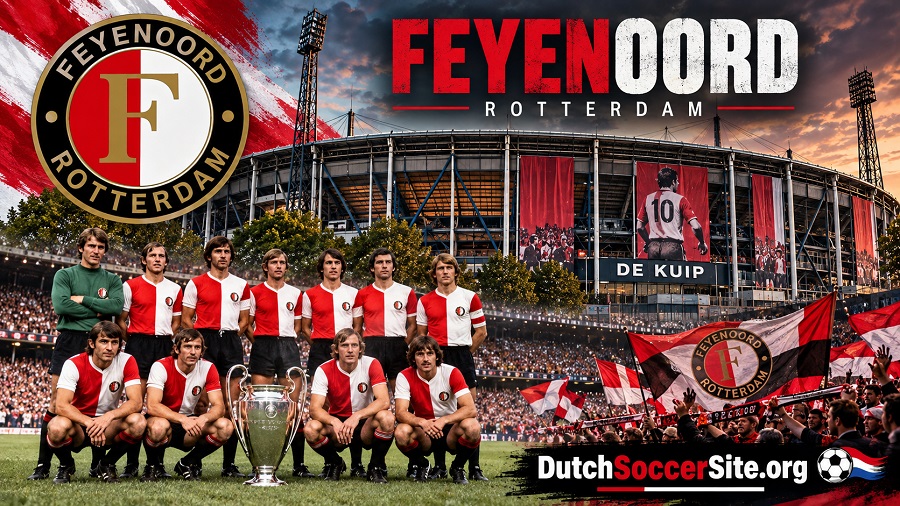
Feyenoord Rotterdam is one of the biggest and most historic football clubs in the Netherlands. Famous for its passionate supporters, iconicand remarkable European achievements, Feyenoord holds a special place in Dutch football history.
Founded in 1908, the Rotterdam club has won 16 Dutch league championships, 14 KNVB Cups and three major European trophies. Feyenoord also made history in 1970 by becoming the first Dutch club to win the European Cup, beating Celtic in the final.
Together with Ajax and PSV Eindhoven, Feyenoord forms the traditional Big Three of Dutch football.
But Feyenoord is about much more than trophies. It is a club built on working-class pride, loyalty and an extraordinary connection between the team and its supporters.
The History of Feyenoord Rotterdam
The Early Years: Founded in 1908
Feyenoord was founded on July 19, 1908, in the southern part of Rotterdam. Initially named Wilhelmina, the club went through several name changes before adopting the name Feijenoord in 1912.
The club’s identity became closely connected to Rotterdam’s working-class communities, particularly those employed in the city’s busy port.
Unlike some of the more traditional Dutch football institutions, Feyenoord developed a reputation for determination, hard work and fighting spirit.
Its motto, “Geen woorden maar daden” (Actions, not words), perfectly captures that mentality.
Feyenoord won its first Dutch national championship in 1924, establishing itself as a major force in Dutch football.
More titles followed in 1928, 1936, 1938 and 1940.
The Golden Era: 1960s and 1970s
The most successful international period in Feyenoord’s history began during the 1960s.
With players such as Coen Moulijn, Willem van Hanegem, Rinus Israël, Wim Jansen and Swedish striker Ove Kindvall, Feyenoord developed into one of Europe’s strongest teams.
Under legendary Austrian manager Ernst Happel, the club reached the pinnacle of European football.
On May 6, 1970, Feyenoord defeated Celtic 2–1 after extra time at San Siro in Milan to win the European Cup.
Ove Kindvall scored the decisive goal, securing a historic victory.
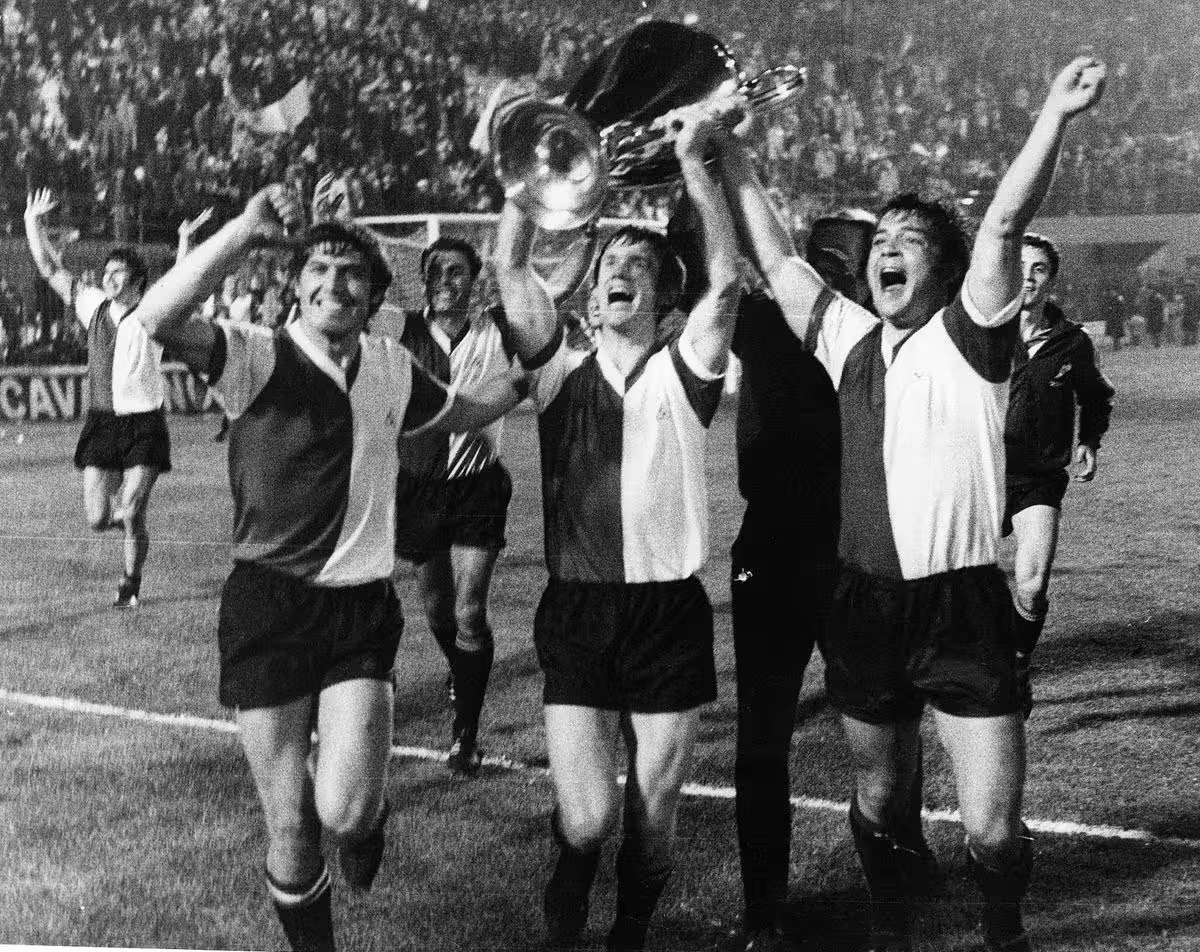
Feyenoord became the first Dutch club ever to win Europe’s most prestigious club competition, one year before Ajax began its famous run of three consecutive European Cups.
Later that year, Feyenoord defeated Argentina’s Estudiantes de La Plata to win the Intercontinental Cup, becoming world champions.
The club added another European trophy in 1974, defeating Tottenham Hotspur in the UEFA Cup final.
These achievements established Feyenoord as one of Europe’s elite clubs.
Feyenoord’s Major Trophies and Honours
Feyenoord has enjoyed considerable success both domestically and internationally.
| Competition | Titles | Most recent |
|---|---|---|
| Dutch League Championship | 16 | 2023 |
| KNVB Cup | 14 | 2024 |
| Johan Cruyff Shield | 5 | 2024 |
| European Cup | 1 | 1970 |
| UEFA Cup | 2 | 2002 |
| Intercontinental Cup | 1 | 1970 |
The Historic 1970 European Cup Victory
Feyenoord’s European Cup triumph remains one of the greatest achievements in Dutch football history.
After eliminating AC Milan during the competition, Feyenoord eventually faced Scottish champions Celtic in the final.
Rinus Israël and Ove Kindvall scored in the 2–1 victory.
The celebrations in Rotterdam were enormous, with hundreds of thousands of supporters welcoming the team home.
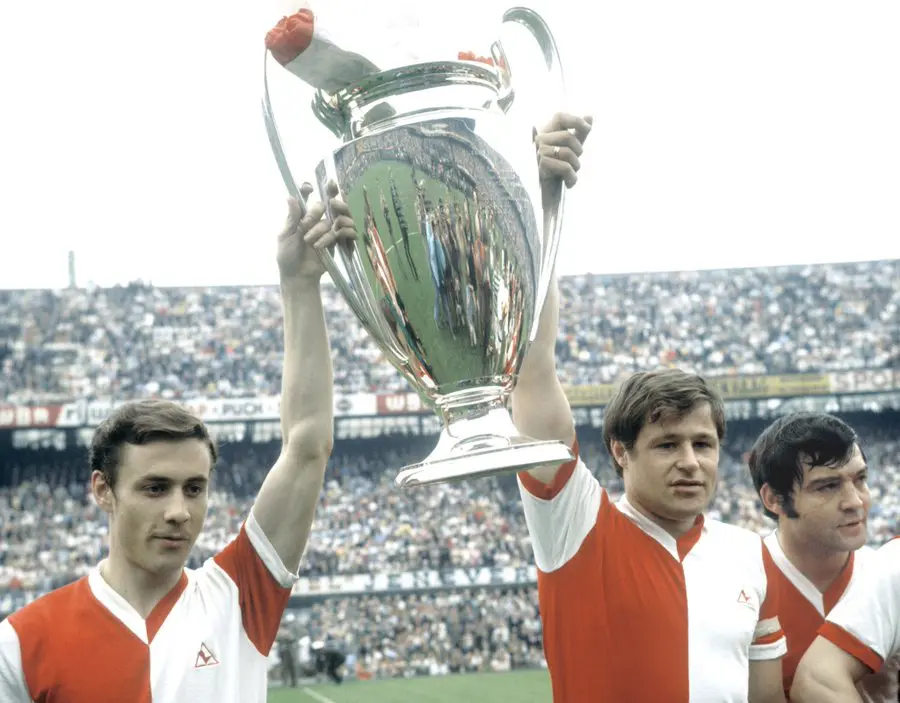 UEFA Cup Glory in 1974 and 2002
Feyenoord became the first Dutch winner of the UEFA Cup in 1974.
After drawing 2–2 with Tottenham Hotspur in London, the Rotterdam side won the return leg 2–0 at De Kuip.
Almost three decades later, Feyenoord produced another unforgettable European campaign.
In 2002, manager Bert van Marwijk guided the club to the UEFA Cup final against Borussia Dortmund.
Playing at its own De Kuip stadium, Feyenoord won 3–2.
Pierre van Hooijdonk scored twice, while Jon Dahl Tomasson added the decisive third goal.
The victory remains Feyenoord’s most recent major European trophy.
Famous Feyenoord Players and Club Legends
Over the decades, Feyenoord has produced and attracted some of the greatest footballers in Dutch football history.
Coen Moulijn – Mister Feyenoord
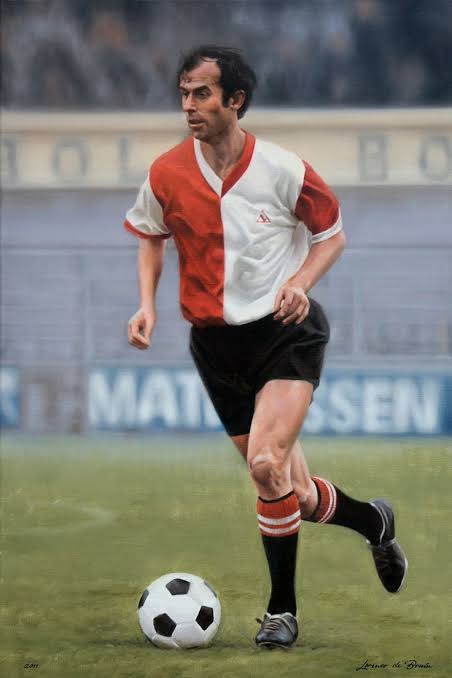 Coen Moulijn is arguably the most iconic player in Feyenoord’s history.
The brilliant left winger played for Feyenoord between 1955 and 1972, becoming famous for his dribbling, technique and loyalty.
Moulijn was instrumental in the club’s 1970 European Cup victory.
His popularity was so enormous that he became known as “Mister Feyenoord.”
A statue of Moulijn stands outside De Kuip, honouring his extraordinary contribution to the club.
Willem van Hanegem – The Master of Midfield
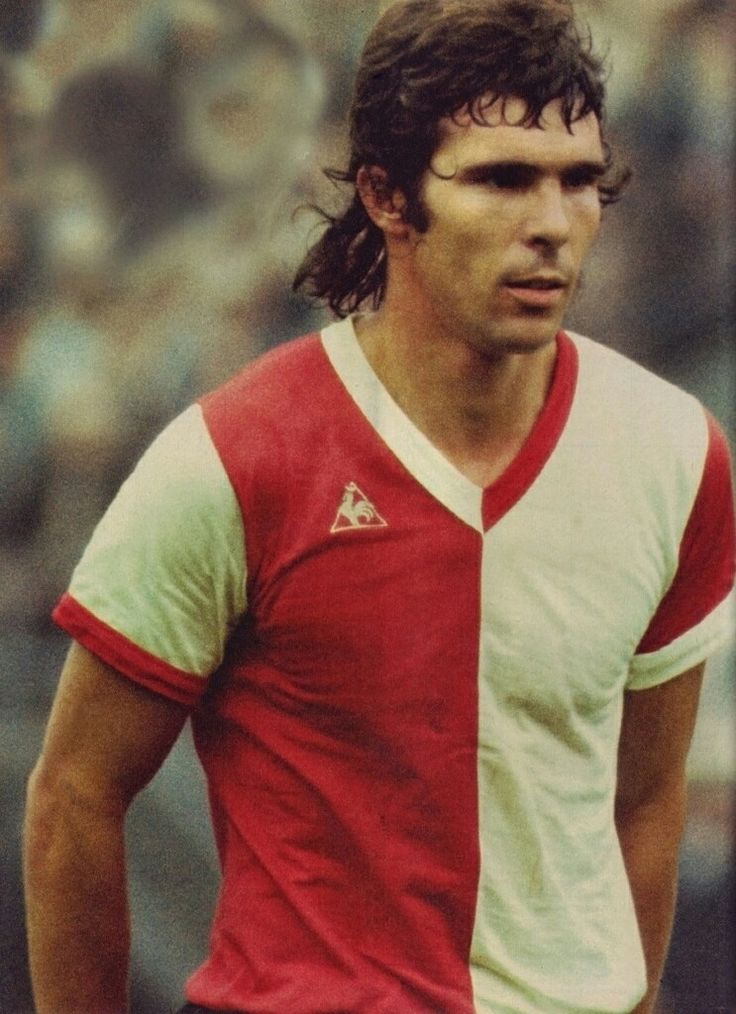 Willem van Hanegem is widely regarded as one of the greatest Dutch midfielders of all time.
Nicknamed De Kromme (The Crooked One), Van Hanegem combined outstanding passing ability with intelligence, creativity and fierce determination.
He played a crucial role in Feyenoord’s European successes and was also an important member of the Netherlands national team that reached the 1974 World Cup final.
Van Hanegem remains one of Feyenoord’s most respected figures.
Ove Kindvall – The European Cup Hero
Swedish striker Ove Kindvall became immortal in Feyenoord history when he scored the winning goal against Celtic in the 1970 European Cup final.
Kindvall was an exceptionally reliable goalscorer and helped Feyenoord dominate Dutch football during the late 1960s and early 1970s.
His goal in Milan remains one of the most famous moments in the club’s history.
Rinus Israël – The Rock
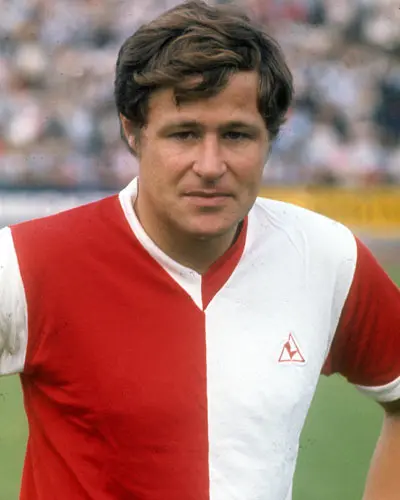 Rinus Israël was one of the finest defenders of his generation.
A commanding central defender and natural leader, Israël captained Feyenoord during its greatest European triumphs.
He scored the equalizer against Celtic in the 1970 European Cup final.
His defensive strength and leadership made him indispensable to Ernst Happel’s successful team.
Wim Jansen – The Tactical Genius
Wim Jansen was a versatile and intelligent midfielder who spent most of his playing career at Feyenoord.
He played a key role in the club’s European successes and represented the Netherlands in the 1974 and 1978 World Cup finals.
Jansen later became an influential coach and football adviser.
Pierre van Hooijdonk – The Free-Kick Specialist
Pierre van Hooijdonk became a Feyenoord legend thanks to his extraordinary performances during the 2001–02 season.
His powerful shooting and exceptional free-kick technique were crucial to Feyenoord’s UEFA Cup success.
Van Hooijdonk scored twice in the 2002 final against Borussia Dortmund and remains one of the club’s most memorable strikers.
Dirk Kuyt – The Symbol of Loyalty
Dirk Kuyt became one of Feyenoord’s most beloved modern players.
After joining from FC Utrecht in 2003, Kuyt developed into a prolific goalscorer before moving to Liverpool.
He returned to Feyenoord in 2015 and played a decisive role in the club’s historic 2016–17 Eredivisie championship.
On the final day of the season, Kuyt scored a hat-trick against Heracles Almelo, securing Feyenoord’s first league title in 18 years.
It was a fairytale ending to his career.
Robin van Persie – From Rotterdam to World Stardom
 Robin van Persie began his professional career at Feyenoord before moving to Arsenal and later Manchester United.
One of the most technically gifted Dutch forwards of his generation, Van Persie became the Netherlands’ all-time leading international goalscorer.
He returned to Feyenoord in 2018, winning the KNVB Cup that year.
His spectacular diving header against Spain at the 2014 World Cup remains one of the most memorable goals in Dutch national team history.
Van Persie later moved into coaching, eventually returning to Feyenoord as head coach in 2025.
Giovanni van Bronckhorst – Player and Championship-Winning Manager
Giovanni van Bronckhorst began his professional career at Feyenoord before enjoying successful spells with Rangers, Arsenal and Barcelona.
He returned to Rotterdam in 2007.
After retiring, Van Bronckhorst moved into coaching and became Feyenoord’s head coach in 2015.
In 2017, he guided the club to its first Eredivisie title since 1999, cementing his status as a Feyenoord legend both as a player and manager.
Famous Feyenoord Managers
Several outstanding coaches have shaped Feyenoord’s history.
Ernst Happel (1969–1973)
The Austrian manager transformed Feyenoord into European champions in 1970. His tactical intelligence, discipline and attacking philosophy helped create the greatest team in the club’s history.
Wiel Coerver (1973–1975)
Coerver led Feyenoord to the Dutch championship and UEFA Cup in 1974. He later became internationally famous for his innovative football training methods.
Bert van Marwijk (2000–2004, 2007–2008)
Van Marwijk guided Feyenoord to UEFA Cup glory in 2002. He later coached the Netherlands national team to the 2010 World Cup final.
Giovanni van Bronckhorst (2015–2019)
Van Bronckhorst ended Feyenoord’s 18-year wait for the Eredivisie title in 2017 and also won two KNVB Cups.
Arne Slot (2021–2024)
Arne Slot revitalized Feyenoord with energetic, attacking football and effective pressing.
Under Slot, Feyenoord reached the UEFA Europa Conference League final in 2022, losing narrowly to AS Roma.
The following season, Feyenoord won the 2022–23 Eredivisie title.
Slot added the KNVB Cup in 2024 before leaving Rotterdam to become Liverpool’s manager.
His successful period helped re-establish Feyenoord as a major force in Dutch football.
De Kuip – One of Europe’s Most Iconic Stadiums
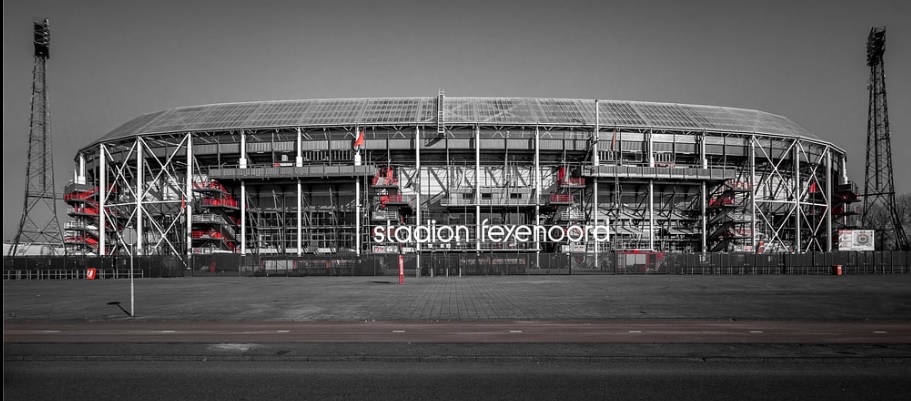
Feyenoord plays its home matches at Stadion Feijenoord, universally known as De Kuip, meaning “The Tub.”
Opened in 1937, De Kuip is one of the most famous football stadiums in Europe.
With a capacity of approximately 51,000 spectators, the stadium is renowned for its steep stands, intimidating atmosphere and extraordinary supporter culture.
De Kuip has hosted numerous important international matches, including the 2002 UEFA Cup final and the final of Euro 2000.
For Feyenoord supporters, however, the stadium represents something much deeper than football.
It is a symbol of Rotterdam’s identity, history and community.
Het Legioen – Feyenoord’s Famous Supporters
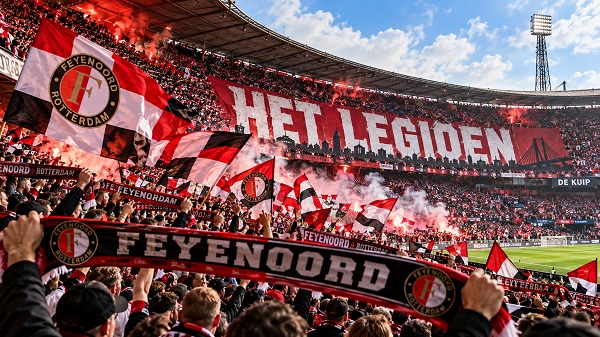
Feyenoord’s supporters are collectively known as Het Legioen (The Legion).
They are famous for their loyalty, spectacular displays and passionate support, particularly during important European matches.
One of the most recognizable traditions is the singing of “You’ll Never Walk Alone” before matches.
The atmosphere at De Kuip is widely considered among the most impressive in European football.
 Feyenoord’s Biggest Rivalries
Feyenoord vs Ajax – De Klassieker
The rivalry between Feyenoord and Ajax is one of the fiercest in European football.
Known as De Klassieker, the fixture represents more than a battle between two successful clubs.
It reflects the historic rivalry between Rotterdam and Amsterdam.
Rotterdam is traditionally associated with its port, industry and working-class mentality, while Amsterdam is associated with commerce, culture and international prestige.
Matches between Feyenoord and Ajax are often emotionally charged and attract enormous attention throughout the Netherlands.
For many Feyenoord supporters, defeating Ajax is one of the highlights of any season.
Feyenoord vs PSV Eindhoven
Feyenoord also maintains an important sporting rivalry with PSV Eindhoven.
Both clubs have competed for Dutch championships, domestic cups and European qualification throughout their histories.
Although the rivalry is generally less hostile than De Klassieker, meetings between Feyenoord and PSV frequently have major implications for the Eredivisie title race.
Rotterdam Derbies
Feyenoord also shares local rivalries with Sparta Rotterdam and Excelsior.
Sparta is the city’s oldest professional football club, while Excelsior has historically maintained close connections with Feyenoord.
These Rotterdam derbies form an important part of the city’s football culture.
Feyenoord Academy – Developing Dutch Football Talent
Feyenoord has one of the Netherlands’ most respected youth academies.
The club has developed numerous players who later enjoyed successful international careers.
Notable academy graduates include:
- Robin van Persie
- Giovanni van Bronckhorst
- Stefan de Vrij
- Bruno Martins Indi
- Georginio Wijnaldum
- Nathan Aké
- Tyrell Malacia
Feyenoord’s youth development system emphasizes technical ability, tactical understanding, determination and teamwork.
The academy has played an important role in supplying talent to the Netherlands national team.
Feyenoord and the Netherlands National Team
Feyenoord has made a significant contribution to the history of the Dutch national team, commonly known as Oranje.
During the famous 1974 World Cup campaign, Feyenoord supplied seven players to the Dutch squad, more than any other club.
Among them were Willem van Hanegem, Wim Jansen and Wim Rijsbergen.
These players contributed to the development of the Netherlands’ internationally celebrated Total Football philosophy.
In later generations, players such as Robin van Persie, Giovanni van Bronckhorst, Georginio Wijnaldum and Stefan de Vrij continued Feyenoord’s strong connection with Oranje.
Feyenoord’s Modern Revival
Following its 2002 UEFA Cup victory, Feyenoord experienced periods of financial difficulty and inconsistent performances.
For many years, the club struggled to compete consistently with Ajax and PSV for the Dutch championship.
However, Feyenoord gradually rebuilt its sporting organization.
The 2017 Eredivisie title under Giovanni van Bronckhorst marked a major turning point.
A second revival followed under Arne Slot, whose modern playing philosophy helped Feyenoord reach the 2022 Conference League final and win the 2023 Dutch championship.
The 2024 KNVB Cup victory further demonstrated the club’s renewed competitiveness.
In recent years, Feyenoord has also gained recognition for developing and improving players such as Santiago Giménez, Orkun Kökçü, Mats Wieffer, Lutsharel Geertruida and David Hancko.
These developments strengthened Feyenoord’s position as one of the leading clubs in Dutch football.
Interesting Facts About Feyenoord Rotterdam
- Feyenoord was founded on July 19, 1908.
- The club was originally called Wilhelmina.
- Feyenoord became the first Dutch club to win the European Cup in 1970.
- The club also won the Intercontinental Cup in 1970.
- Feyenoord won the UEFA Cup in both 1974 and 2002.
- De Kuip has been Feyenoord’s home stadium since 1937.
- The club’s famous motto is “Geen woorden maar daden.”
- Feyenoord’s supporters are known as Het Legioen.
- Dirk Kuyt scored a hat-trick to secure the 2017 Dutch championship.
- Feyenoord has won 16 Dutch national championships.
Frequently Asked Questions About Feyenoord
When was Feyenoord founded?
Feyenoord was founded on July 19, 1908, in Rotterdam, Netherlands.
How many Eredivisie titles has Feyenoord won?
Feyenoord has won 16 Dutch national championships, including titles won before the Eredivisie was established in 1956. Its most recent championship came in 2023.
Has Feyenoord ever won the Champions League?
Feyenoord won the European Cup, the predecessor of the modern UEFA Champions League, in 1970. It has not won the competition since its rebranding in 1992.
Who is Feyenoord’s greatest player?
Coen Moulijn and Willem van Hanegem are frequently considered among the greatest players in Feyenoord’s history. Other legendary figures include Ove Kindvall, Wim Jansen, Dirk Kuyt and Robin van Persie.
What is Feyenoord’s stadium called?
Feyenoord plays at Stadion Feijenoord, better known as De Kuip, which opened in 1937.
Who are Feyenoord’s biggest rivals?
Ajax is Feyenoord’s biggest traditional rival. Their matches are known as De Klassieker. PSV Eindhoven is another major sporting rival.
What does Feyenoord mean?
Feyenoord takes its name from the Feijenoord district in Rotterdam, where the club was founded.
Conclusion – A Club Built on Passion and Tradition
Feyenoord Rotterdam is much more than one of the Netherlands’ most successful football clubs.
From the historic European Cup victory in 1970 to the UEFA Cup triumph in 2002 and the modern revival under Arne Slot, Feyenoord has repeatedly demonstrated its ability to compete at the highest level.
The club’s legendary players, passionate supporters and iconic De Kuip stadium make Feyenoord a unique institution in European football.
While Ajax and PSV have enjoyed their own remarkable achievements, Feyenoord continues to represent the fighting spirit, loyalty and pride of Rotterdam.
For generations of supporters, Feyenoord will always be more than football.
Geen woorden maar daden – Actions, not words.
Discover more about Dutch football, Oranje legends and Eredivisie clubs at DutchSoccerSite.org.