
PSV Eindhoven: Club History, Legends, Trophies and Famous Players
PSV Eindhoven is one of the most successful football clubs in the Netherlands and one of the country’s most recognizable names in European football. From its origins as a sports club for Philips employees to winning the European Cup in 1988, PSV has built a remarkable history filled with trophies, legendary players and unforgettable matches.
The Eindhoven club has also played an important role in developing some of football’s biggest stars. Brazilian legends Romário and Ronaldo Nazário both made their names in European football at PSV, while Dutch internationals such as Ruud van Nistelrooij, Arjen Robben, Memphis Depay and Cody Gakpo followed similar paths.
But what makes PSV such a special club? And how did a team founded for factory workers become a European champion?
PSV Eindhoven: Quick Facts
| Full name | Philips Sport Vereniging |
| Common name | PSV Eindhoven |
| Founded | August 31, 1913 |
| City | Eindhoven, Netherlands |
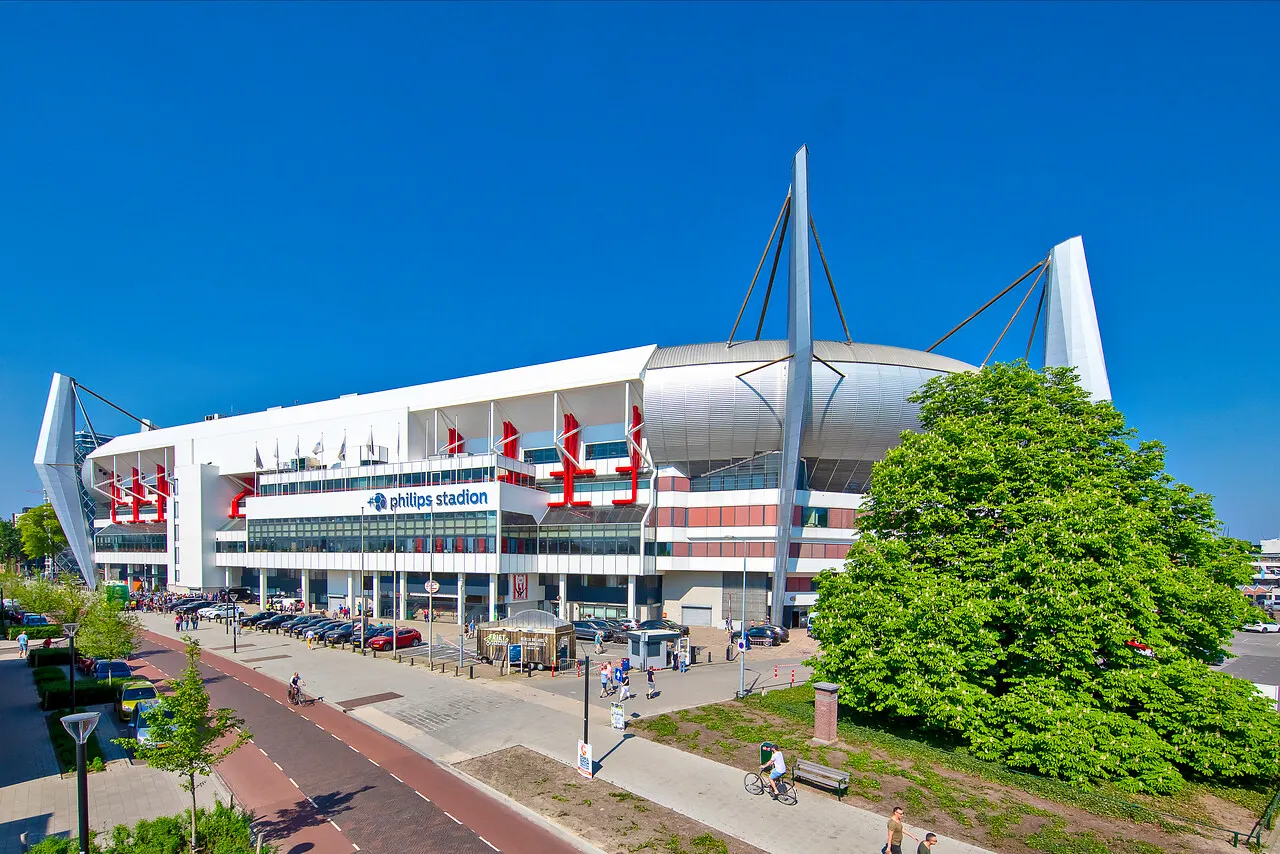
| Stadium | Philips Stadion |
| Stadium capacity | Approximately 35,000 |
| Club colours | Red and white |
| Nickname | Boeren (Farmers) |
| League | Eredivisie |
| First Dutch championship | 1929 |
| European Cup | 1988 |
| UEFA Cup | 1978 |
| Famous coaches | Guus Hiddink, Kees Rijvers, Dick Advocaat, Phillip Cocu |
| Official website | PSV.nl |
The History of PSV Eindhoven: From Philips Factory Workers to Football Giants
PSV Eindhoven was officially founded on August 31, 1913, as a sports association for employees of the Dutch electronics company Philips.
However, the club’s roots go back even further.
In December 1910, Philips workers established a football team known as the Philips Elftal. The team played its first match in 1911 at the same location where the Philips Stadion stands today.
The connection between PSV and Philips remains one of the most distinctive aspects of the club’s identity.
Unlike many traditional European football clubs that developed from neighbourhood or community teams, PSV was closely connected to one of the Netherlands’ most important industrial companies.
This relationship helped establish a strong organizational foundation that would eventually support PSV’s development into a leading Dutch football club.
PSV’s First National Championship
PSV won its first Dutch national championship in 1929, marking the beginning of its success at the highest level.
The club continued to develop throughout the following decades and became an established presence in Dutch football.
In 1955, PSV became the first Dutch club to participate in the European Cup, the predecessor of today’s UEFA Champions League.
That European debut was an early indication of the international ambitions that would define the club’s future.
The 1970s: PSV Becomes a European Power
The 1970s represented a major turning point in PSV’s history.
Under coach Kees Rijvers, the Eindhoven club developed an outstanding team featuring some of the Netherlands’ finest players.
Among them were Willy van der Kuijlen, Jan van Beveren, Willy van de Kerkhof and René van de Kerkhof.
The team combined technical ability with tactical discipline and became a serious force in European football.
PSV Wins the 1978 UEFA Cup
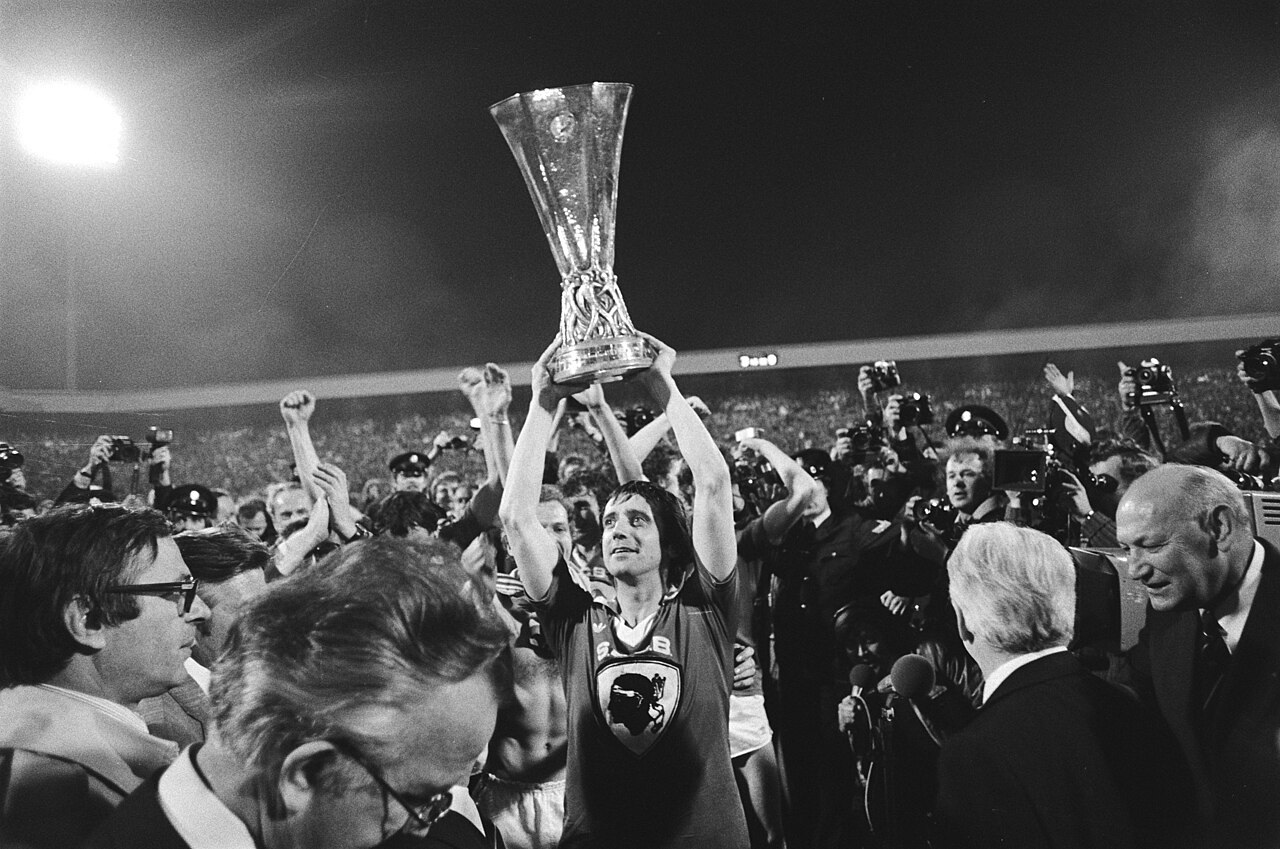
In 1978, PSV achieved its first major European triumph by winning the UEFA Cup.
After eliminating several strong opponents, including Barcelona in the semifinals, PSV faced French club Bastia in the final.
The first leg in France ended in a goalless draw.
Back in Eindhoven, PSV delivered an impressive performance, winning 3–0 to secure the trophy.
It was a historic moment for the club and established PSV as a genuine European contender.
The victory also strengthened the club’s reputation for developing Dutch international players.
 The Golden Year: PSV Wins the 1988 European Cup
If one season defines PSV Eindhoven’s history, it is undoubtedly 1987–88.
Under legendary Dutch coach Guus Hiddink, PSV achieved an extraordinary treble:
- Dutch Eredivisie championship
- KNVB Cup
- European Cup
Winning all three competitions in the same season remains the club’s greatest achievement.
PSV vs Benfica: The 1988 European Cup Final
On May 25, 1988, PSV faced Portuguese giants Benfica in Stuttgart, West Germany.
The final was a tense and tactical encounter.
Neither team managed to score during regular time or extra time, meaning the European Cup would be decided by a penalty shootout.
After both teams converted their first five penalties, Benfica defender António Veloso stepped forward.
PSV goalkeeper Hans van Breukelen saved his attempt, giving Eindhoven its first European Cup.
It was a moment that would become part of Dutch football history.
PSV Wins the 1988 European Cup
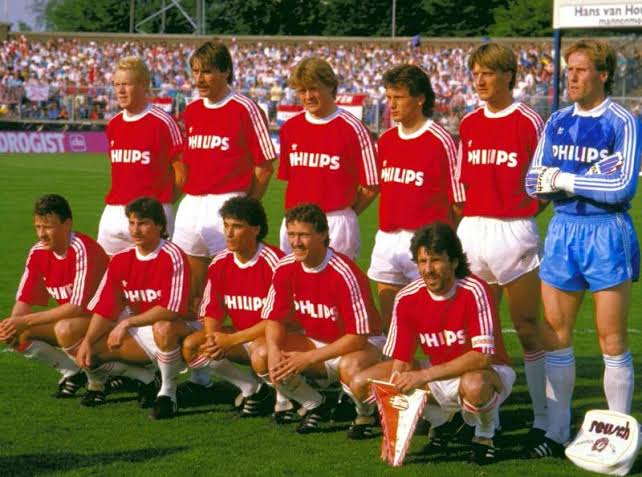
PSV’s 1988 European Champions
The team included several outstanding players:
- Hans van Breukelen – goalkeeper and penalty shootout hero
- Ronald Koeman – influential defender and leader
- Eric Gerets – experienced Belgian international
- Søren Lerby – powerful and intelligent midfielder
- Gerald Vanenburg – technically gifted attacking midfielder
- Wim Kieft – dangerous centre-forward
- Berry van Aerle – dependable defender
Coach Guus Hiddink deserves enormous credit for creating a team capable of competing against Europe’s strongest clubs.
The 1988 European Cup remains PSV’s most prestigious trophy.
Famous PSV Eindhoven Players: The Greatest Legends
Over the decades, PSV has produced, developed and attracted an extraordinary collection of footballers.
Some became club legends, while others used Eindhoven as the launching pad for spectacular international careers.
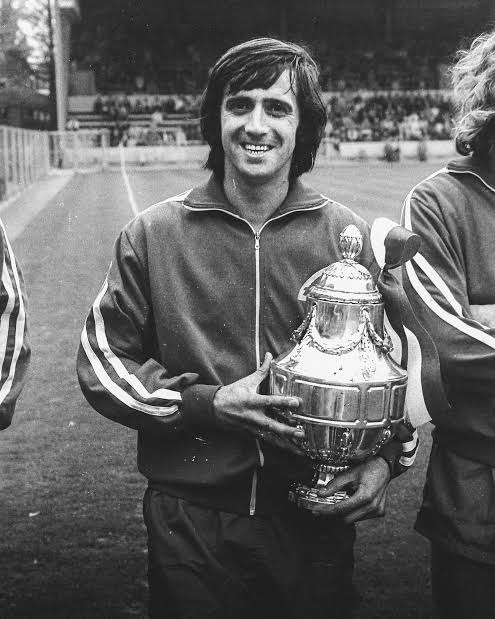
Willy van der Kuijlen: Mister PSV
No history of PSV is complete without Willy van der Kuijlen.
Known affectionately as Mister PSV, he is the club’s all-time leading goalscorer.
Van der Kuijlen scored 308 Eredivisie goals for PSV and played an important role in the club’s domestic and European successes during the 1970s.
His loyalty, technical ability and remarkable goalscoring record made him one of the most respected players in PSV history.
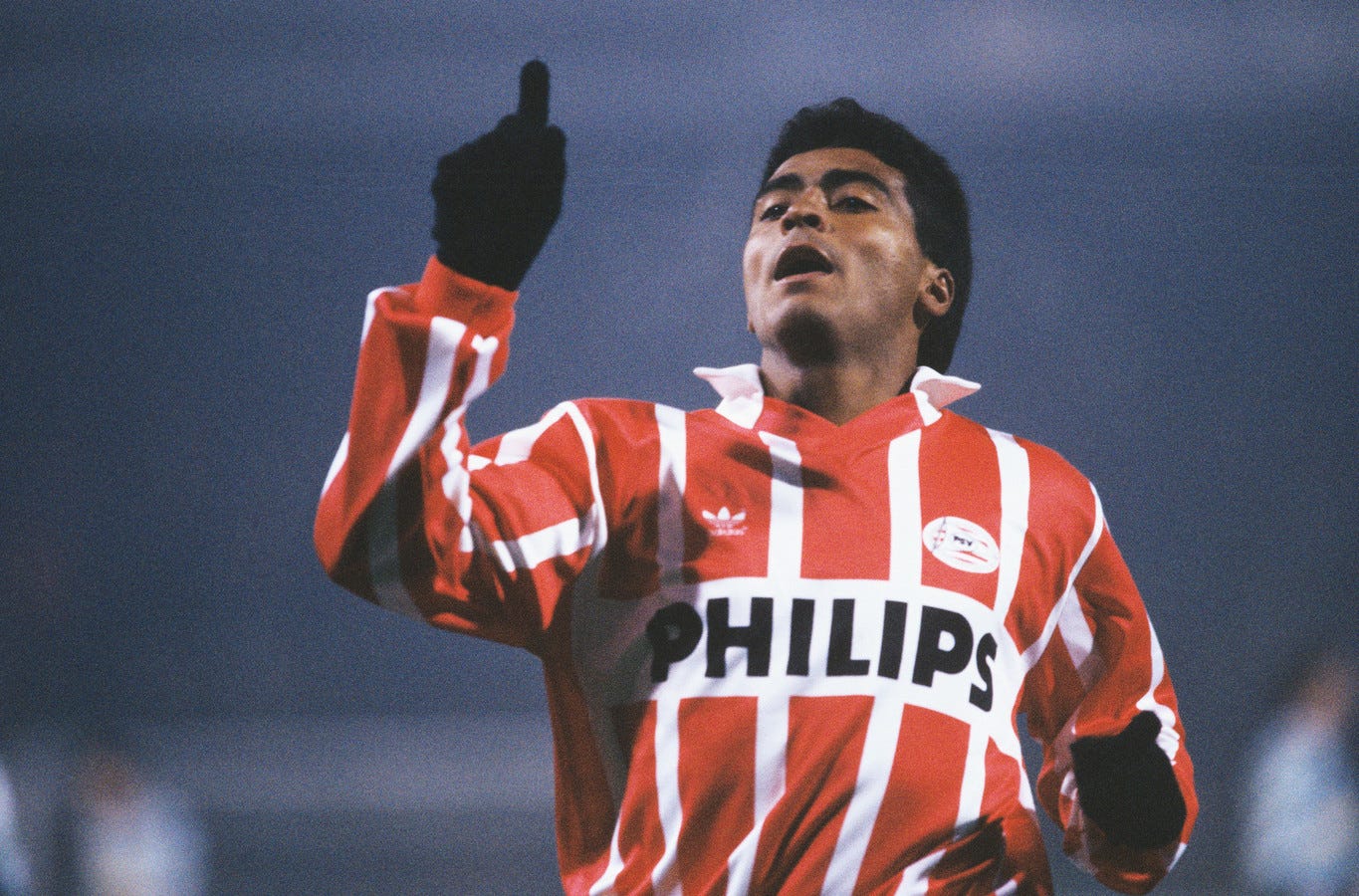
 Romário: The Brazilian Goalscoring Sensation
When PSV signed Romário from Vasco da Gama in 1988, the Brazilian striker was still relatively unknown to many European supporters.
That quickly changed.
Between 1988 and 1993, Romário became one of the most feared forwards in European football.
His incredible finishing ability, close control and instinct inside the penalty area made him almost impossible to stop.
Romário scored 98 goals in his first three Eredivisie seasons alone.
He later joined Barcelona, where he became an international superstar, before helping Brazil win the 1994 World Cup.
For many PSV supporters, Romário remains one of the most naturally gifted players ever to wear the club’s red-and-white shirt.
 Ronaldo Nazário: A Teenage Phenomenon
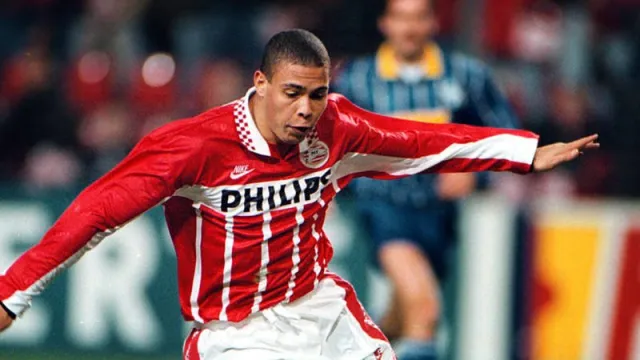
In 1994, PSV signed another extraordinary Brazilian talent.
Ronaldo Nazário arrived in Eindhoven at just 17 years old.
Over the following two seasons, he demonstrated an astonishing combination of speed, strength, dribbling and finishing.
Ronaldo scored 42 Eredivisie goals in 46 appearances for PSV.
His performances attracted worldwide attention, and Barcelona signed him in 1996.
Ronaldo would eventually become a two-time Ballon d’Or winner and one of the greatest strikers in football history.
PSV supporters had the privilege of watching his European career begin.
 Ruud van Nistelrooij: The Complete Goalscorer
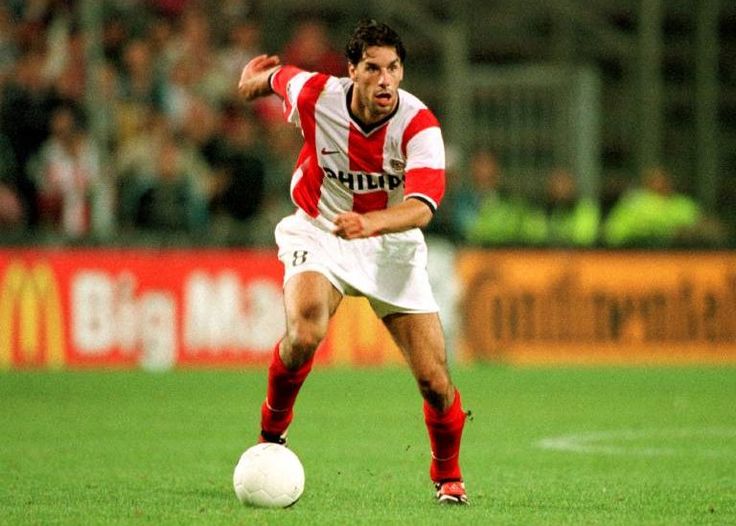
Ruud van Nistelrooij joined PSV from Heerenveen in 1998 and quickly developed into one of Europe’s most dangerous strikers.
He scored 62 league goals in his first two seasons at Eindhoven.
His movement, finishing and ability to score from difficult positions made him an exceptional centre-forward.
Manchester United signed him in 2001, and he later enjoyed further success with Real Madrid.
Van Nistelrooij also returned to PSV as a coach, strengthening his connection with the club.
Arjen Robben: Speed, Skill and Determination
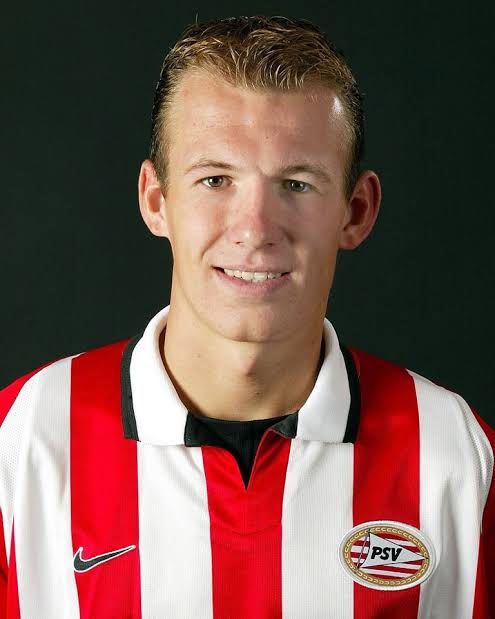
Arjen Robben joined PSV from FC Groningen in 2002.
His acceleration, dribbling and attacking intelligence quickly made him one of the Eredivisie’s most exciting young players.
After two seasons in Eindhoven, he moved to Chelsea and later played for Real Madrid and Bayern Munich.
Robben became one of the most successful Dutch footballers of his generation, winning the Champions League with Bayern Munich in 2013.
 Memphis Depay: From PSV Talent to Oranje Star
Memphis Depay developed through PSV’s youth academy and became one of the club’s most important attacking players.
His breakthrough came during the 2014–15 season, when he scored 22 Eredivisie goals and helped PSV win the Dutch championship.
His performances earned him a transfer to Manchester United.
Memphis subsequently established himself as an important player for the Netherlands national team.
Read more about his career in our article: Who Is Memphis Depay?
Cody Gakpo: Eindhoven’s Homegrown Star
Cody Gakpo is another outstanding example of PSV’s ability to develop young players.
Born in Eindhoven, Gakpo joined the PSV academy as a child and eventually became one of the team’s leading attackers.
His combination of physical strength, technical ability and goalscoring made him an important player for both PSV and Oranje.
Following impressive performances for the Netherlands at the 2022 World Cup, Gakpo joined Liverpool in January 2023.
His development illustrates why PSV remains such an important club for Dutch football talent.
Mark van Bommel: PSV Captain and Coach
Mark van Bommel holds a special place in PSV history.
The midfielder joined PSV from Fortuna Sittard in 1999 and became a key figure in the team’s domestic and European successes.
Known for his leadership, competitive mentality and tactical intelligence, Van Bommel helped PSV win multiple Dutch championships.
In 2005, he left Eindhoven for Barcelona, subsequently enjoying successful periods at Bayern Munich and AC Milan.
He also captained the Netherlands national team.
In 2012, Van Bommel returned to PSV for the final season of his playing career.
Later, he became the club’s head coach, continuing his long association with Eindhoven.
Read more about his career: Mark van Bommel Retires.
Ruben van Bommel: The Next Generation
The Van Bommel family’s connection with PSV continues through Mark’s son Ruben.
The talented winger spent part of his youth career at PSV before developing professionally at MVV Maastricht and AZ Alkmaar.
In 2025, Ruben returned to Eindhoven to continue his career at the highest level of Dutch football.
His pace, direct attacking style and goalscoring potential have made him an exciting prospect.
Ruben has also followed his father into the Netherlands national team, extending an extraordinary family football tradition that includes his grandfather, former Oranje coach Bert van Marwijk.
Read our full profile: Who Is Ruben van Bommel?.
The Philips Stadion: PSV’s Historic Home
The Philips Stadion is one of the most recognizable football stadiums in the Netherlands.
Located close to Eindhoven’s city centre, the stadium has been PSV’s home throughout the club’s history.
What makes the venue particularly unusual is that PSV still plays at essentially the same location where the original Philips football team began playing in 1911.
The stadium accommodates approximately 35,000 supporters and is famous for its atmosphere during important Eredivisie and European matches.
The close proximity of the stands to the pitch creates an intense environment, especially when PSV faces traditional rivals Ajax or Feyenoord.
For visiting football fans, the Philips Stadion is also an important part of Eindhoven’s industrial and sporting heritage.
PSV vs Ajax: One of Dutch Football’s Biggest Rivalries
PSV’s rivalry with Ajax is one of the defining fixtures of Dutch football.
Both clubs have regularly competed for Eredivisie titles, Champions League qualification and the country’s best young players.
Ajax is traditionally associated with Amsterdam and its famous youth development philosophy, while PSV has built its reputation through a combination of academy graduates, intelligent recruitment and strong team organization.
The matches between PSV and Ajax are often referred to as De Topper.
Although the rivalry does not have the same geographical background as Ajax versus Feyenoord, it has frequently determined the outcome of the Dutch championship.
For PSV supporters, defeating Ajax is always one of the highlights of the season.
PSV vs Feyenoord: The Battle Between Dutch Football Giants
Feyenoord Rotterdam is another of PSV’s major domestic rivals.
Together with Ajax, the two clubs form the traditional Dutch Big Three.
PSV and Feyenoord have enjoyed numerous memorable encounters over the decades, with both teams known for passionate supporters and strong football traditions.
Feyenoord’s De Kuip stadium and PSV’s Philips Stadion provide two of the most atmospheric settings in Dutch football.
Matches between these clubs regularly have significant consequences for the Eredivisie title race.
PSV Eindhoven’s Most Successful Coaches
PSV’s success has depended not only on talented footballers but also on several outstanding managers.
Kees Rijvers
Kees Rijvers helped transform PSV into a major European force during the 1970s.
His team won three Dutch championships and the 1978 UEFA Cup.
He remains one of the most important coaches in the club’s history.
Guus Hiddink
Guus Hiddink is perhaps PSV’s most celebrated manager.
His greatest achievement was guiding the team to the historic 1988 treble.
Hiddink later returned to Eindhoven and enjoyed further domestic success, including reaching the 2005 Champions League semifinals.
Dick Advocaat
Dick Advocaat managed PSV during two separate periods.
He helped the club win the Eredivisie in 1997 and the KNVB Cup in 2012.
Advocaat also coached the Netherlands national team, making him another important figure in Dutch football history.
Phillip Cocu
Former PSV midfielder Phillip Cocu became one of the club’s most successful modern coaches.
Under his leadership, PSV won three Eredivisie championships in four seasons between 2015 and 2018.
His teams were known for their organization, discipline and ability to perform under pressure.
Peter Bosz
Peter Bosz brought an attacking philosophy to PSV after becoming head coach in 2023.
His teams emphasized high pressing, quick passing and dominating possession.
The approach proved highly successful, with PSV winning consecutive Eredivisie championships in 2024 and 2025.
Bosz’s attacking style also helped PSV become one of the most entertaining teams in Dutch football.
PSV Eindhoven’s European Football History
Although PSV competes in a relatively small domestic league, the club has a proud record in European competitions.
Its two greatest achievements remain the 1978 UEFA Cup and 1988 European Cup.
However, PSV has also produced several memorable Champions League campaigns.
The 2004–05 Champions League Semifinal
One of PSV’s most impressive modern European performances came during the 2004–05 season.
Under Guus Hiddink, PSV reached the Champions League semifinals, where the team faced AC Milan.
After losing the first leg 2–0 in Italy, PSV produced an outstanding performance in Eindhoven.
The Dutch side won the return match 3–1, but Milan progressed on away goals.
Despite the disappointment, PSV earned widespread admiration for its attacking football and determination.
The campaign remains one of the club’s finest European achievements since 1988.
PSV Eindhoven’s Youth Academy: Developing Future Stars
PSV has long been recognized for its ability to identify and develop talented young players.
The PSV Academy provides a pathway from youth football to the professional first team.
The club also operates Jong PSV, its reserve team, which competes in the Dutch Eerste Divisie.
This gives young players valuable experience against professional opposition before they are ready for the Eredivisie.
Over the years, the academy has helped develop players such as Memphis Depay, Cody Gakpo and Steven Bergwijn.
For a club competing against wealthier teams from England, Spain and Germany, youth development remains an essential part of its strategy.
Why Is PSV Eindhoven Called the Farmers?
One of PSV’s best-known nicknames is Boeren, the Dutch word for farmers.
The nickname originally reflected the contrast between the industrial and provincial surroundings of Eindhoven and the more metropolitan image associated with Amsterdam.
Although the term was sometimes used by rival supporters as an insult, PSV fans embraced it as a symbol of pride.
Today, Boeren represents the club’s connection with Brabant, its hardworking identity and its loyal supporters.
It is an example of how a nickname can become an important part of a football club’s culture.
PSV Eindhoven and the Netherlands National Team
PSV has played a major role in the history of the Netherlands national team.
Many important Oranje players developed their careers in Eindhoven or represented PSV during successful periods.
Among the most famous are:
- Willy van der Kuijlen
- Jan van Beveren
- Willy van de Kerkhof
- René van de Kerkhof
- Hans van Breukelen
- Ronald Koeman
- Mark van Bommel
- Arjen Robben
- Ruud van Nistelrooij
- Memphis Depay
- Cody Gakpo
PSV’s contribution to the Netherlands team was particularly significant during the 1970s and 1980s.
The club continues to play an important role in developing players capable of competing internationally.
Frequently Asked Questions About PSV Eindhoven
What does PSV stand for?
PSV stands for Philips Sport Vereniging, meaning Philips Sports Association. The club was founded in 1913 for employees of the Philips company.
When was PSV Eindhoven founded?
PSV Eindhoven was officially founded on August 31, 1913.
Has PSV ever won the Champions League?
Yes. PSV won the European Cup, the predecessor of the modern UEFA Champions League, in 1988 after defeating Benfica in a penalty shootout.
How many European trophies has PSV won?
PSV has won two major European trophies: the UEFA Cup in 1978 and the European Cup in 1988.
Who is PSV’s all-time leading goalscorer?
Willy van der Kuijlen is PSV’s all-time leading goalscorer, with 308 Eredivisie goals for the club.
Did Ronaldo play for PSV Eindhoven?
Yes. Brazilian striker Ronaldo Nazário played for PSV from 1994 until 1996 before joining Barcelona.
Did Romário play for PSV?
Yes. Romário played for PSV between 1988 and 1993 and became one of the club’s most celebrated foreign players.
Which stadium does PSV play in?
PSV plays its home matches at the Philips Stadion in Eindhoven, which has a capacity of approximately 35,000 spectators.
Who are PSV Eindhoven’s biggest rivals?
PSV’s biggest domestic rivals are Ajax Amsterdam and Feyenoord Rotterdam.
What is PSV Eindhoven’s nickname?
PSV is commonly known as Boeren, meaning Farmers, a nickname proudly embraced by its supporters.
Conclusion: Why PSV Eindhoven Is One of Dutch Football’s Greatest Clubs
PSV Eindhoven’s history is a remarkable story of ambition, development and success.
From a football team established for Philips factory workers to becoming European champions, the club has achieved far more than its modest beginnings might have suggested.
The 1978 UEFA Cup victory, the historic 1988 treble and the development of international stars such as Romário, Ronaldo, Ruud van Nistelrooij and Memphis Depay have secured PSV’s place in European football history.
At the same time, the club remains deeply connected to Eindhoven, Brabant and its loyal supporters.
For fans of Dutch football, PSV is much more than a successful Eredivisie team. It is an essential part of the Netherlands’ football heritage, with a proud past and a continuing role in shaping the country’s next generation of stars.